
UX/UI DESIGN
MentorGrid App
Designing a structured, goal-driven mentorship ecosystem that connects professionals with experienced mentors through guided progress tracking, real-time communication, and community engagement.
Lead UX Designer
10 Weeks
JHB Metrobus
Concept
Lead UX Designer
12 Weeks
Web + Mobile
Concept
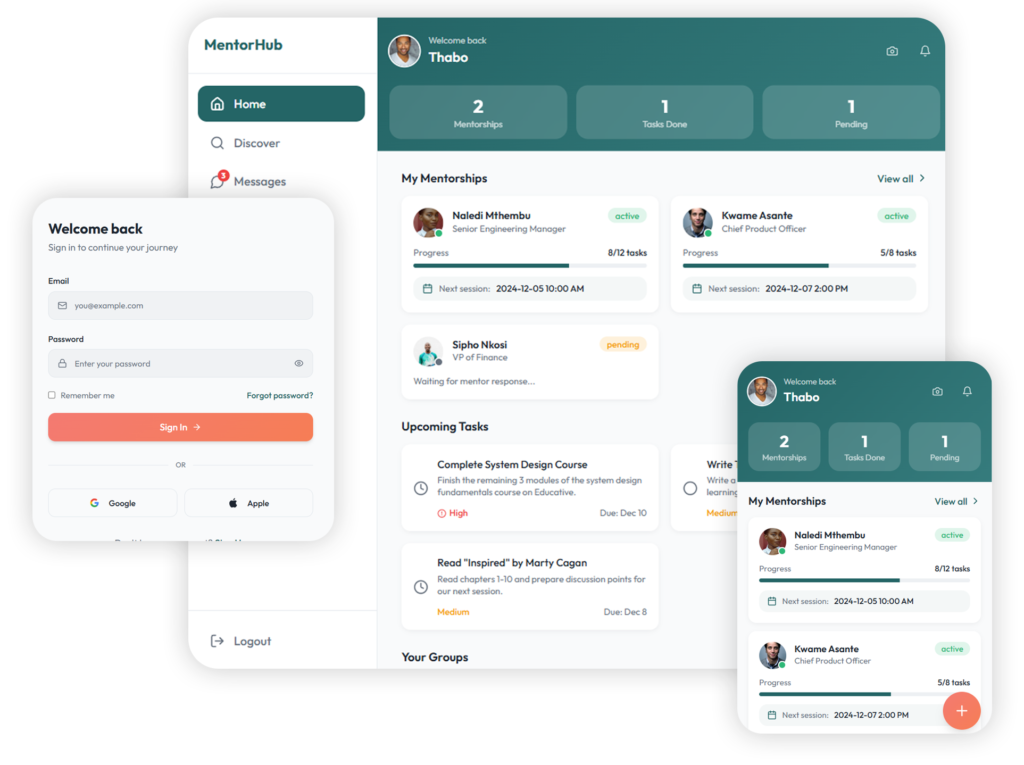
Overview
MentorGrid is a web-based and mobile mentorship platform built to help early and mid-career professionals connect with experienced industry mentors, track structured goals, and engage in career-focused communities. Unlike generic networking platforms, MentorGrid focuses on structured mentorship journeys, combining: Goal & task tracking, scheduled mentorship sessions, real-time chat/call/video, industry-based communities, and discover & filter mentors intelligently.
The product is designed to reduce career uncertainty and replace unstructured mentorship conversations with measurable growth.
User Research
Prompt Engineering
Figma
Prototyping
Generative AI
Lovable
User Persona
ChatGPT
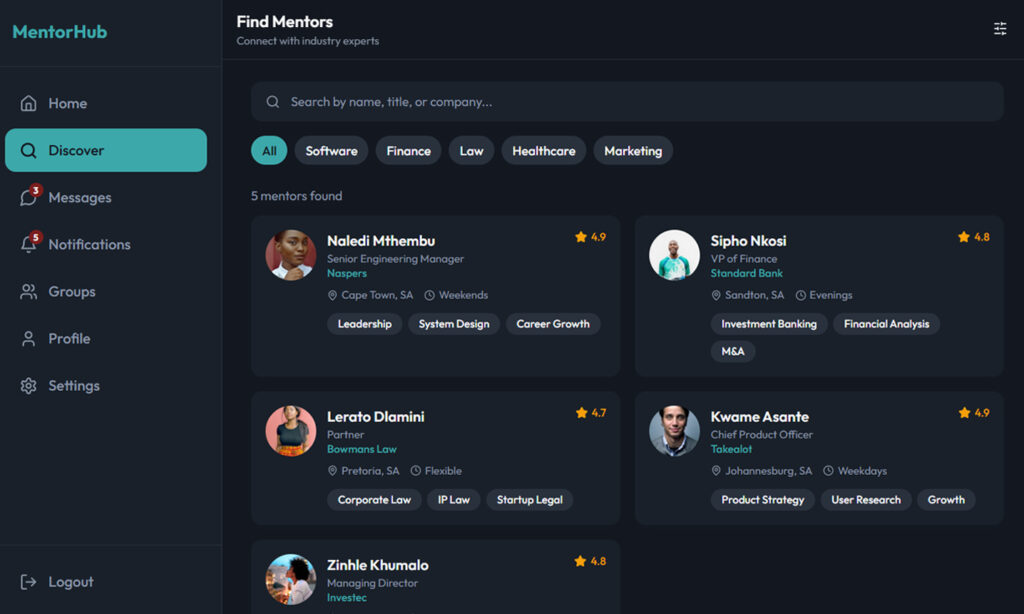
Problem Statement
How might we help professionals find the right mentor and progress meaningfully in their careers through structured mentorship, measurable goals, and frictionless communication?
User Research
To understand how commuters interact with transit information, the design process considered common behaviors and frustrations experienced by bus riders.
Research Methods
- 18 semi-structured interviews (students, junior professionals, mid-career professionals)
- Survey of 76 respondents about mentorship experiences
- Competitive analysis of LinkedIn, ADPList, GrowthMentor, and Meetup
- 8 contextual inquiry sessions with individuals actively seeking mentors
Many commuters rely on informal methods to understand routes, such as asking other riders or memorizing bus stops.
Existing digital tools often prioritize route numbers instead of user destinations, which does not align with how people naturally plan trips.
Key Findings
74%
of respondents said mentorship conversations lacked clear goals or measurable outcomes.
88%
of users struggle to filter mentors by relevance (industry, experience level, availability).
44%
of respondents said they host their mentorships on WhatsApp and Zoom, which leads to disorganization.
62%
reported mentorship sessions didn’t translate into clear action steps.
74%
of respondents said mentorship conversations lacked clear goals or measurable outcomes.
88%
of users struggle to filter mentors by relevance (industry, experience level, availability).
44%
of respondents said they host their mentorships on WhatsApp and Zoom, which leads to disorganization.
62%
reported mentorship sessions didn’t translate into clear action steps.
User Personas

Malebo Dolamo
23 • Junior Data Analyst
“I want someone who’s already walked this path to guide me. I don’t just need advice; I need clear steps I can follow to grow in my career.”
Goals
- Gain clarity on career direction and next steps
- Build practical skills through guided tasks and feedback
- Stay accountable and consistent in personal development
Pain Points
- Unsure which mentor is the right fit for her goals
- Mentorship conversations often feel inspiring but lack structure
- Struggles to stay consistent without accountability

Siyanda Menziwe
45 • Founder of Fintech
“I enjoy mentoring, but I need a simple way to manage multiple mentees without it becoming overwhelming.”
Goals
- Support mentees in a structured and scalable way
- Track mentee progress without constant follow-ups
- Share knowledge efficiently across multiple mentees
Pain Points
- Receives mentorship requests without enough context
- Difficult to track each mentee’s progress over time
- Limited time makes unstructured mentorship inefficient
Key Interface Features
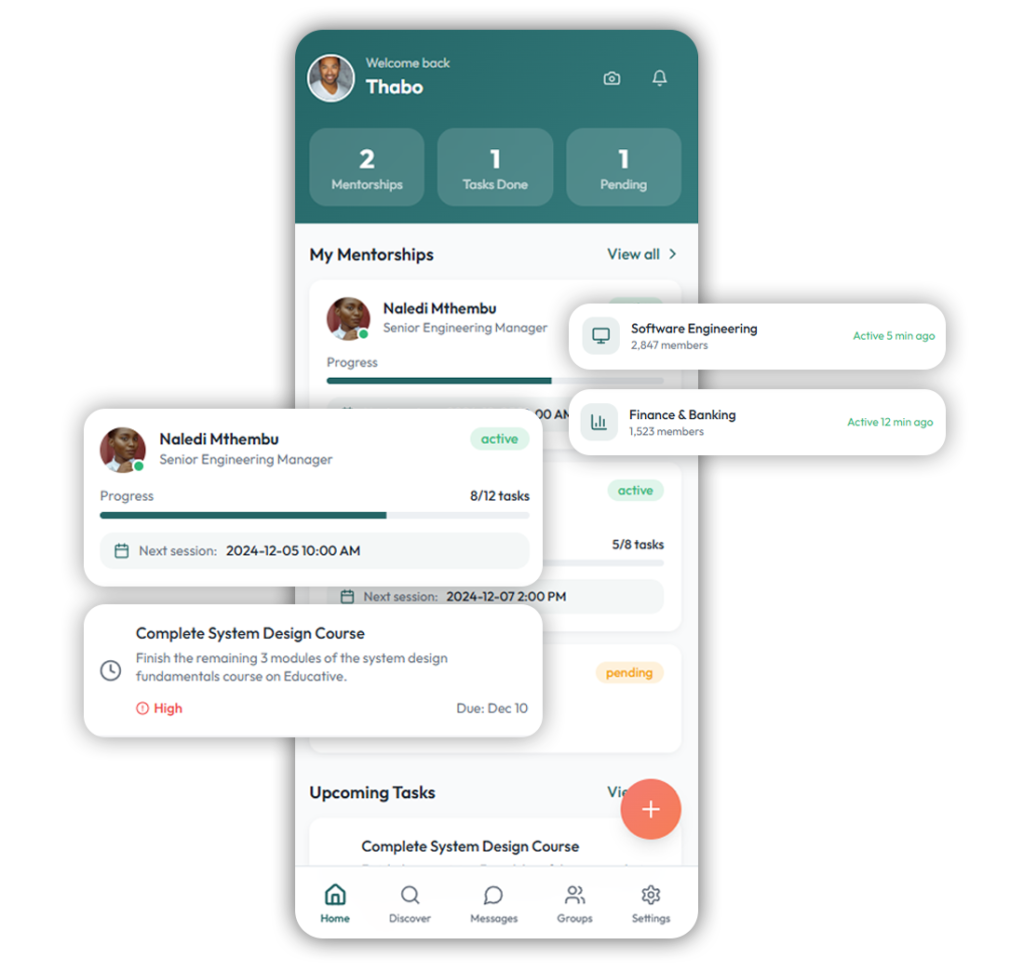
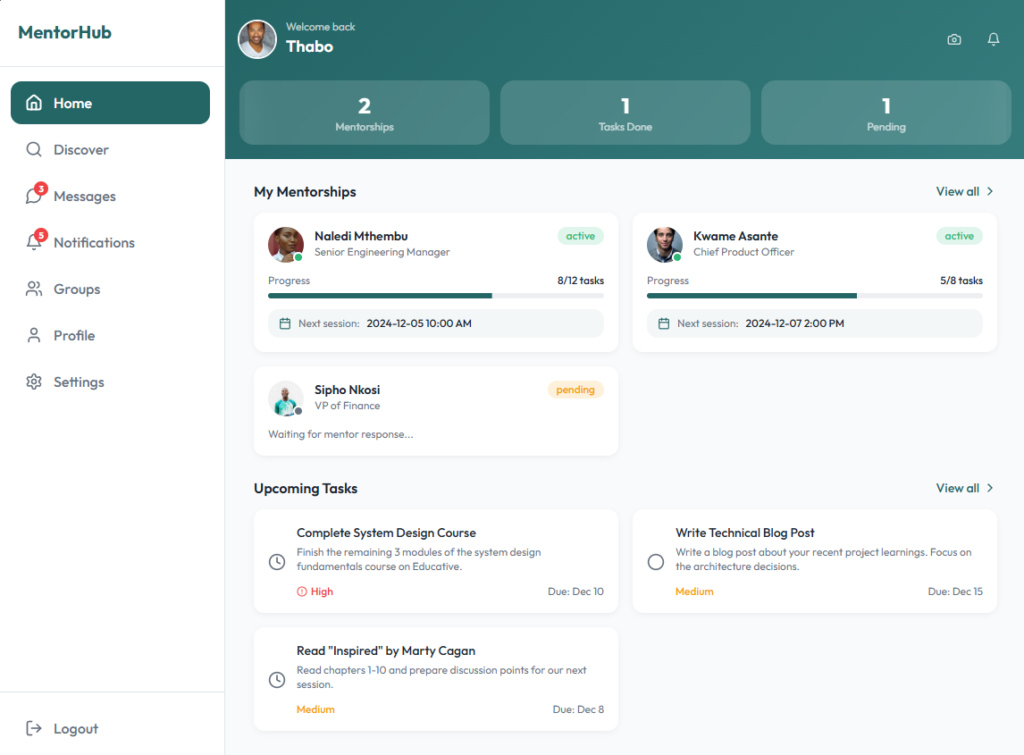
Structured Mentorship Dashboard
The dashboard acts as the central command center for mentees, giving them a clear overview of their mentorship journey at a glance. It transforms what is usually a vague experience into a structured, trackable system by combining progress visibility, upcoming sessions, and actionable tasks in one place.
Mentorship status (Active / Pending)
Progress tracking based on completed tasks
Upcoming sessions with date and time
Quick overview of all active mentors
Upcoming tasks and priorities
This transforms mentorship from conversation-based to outcome-driven.
Smart Mentor Discovery
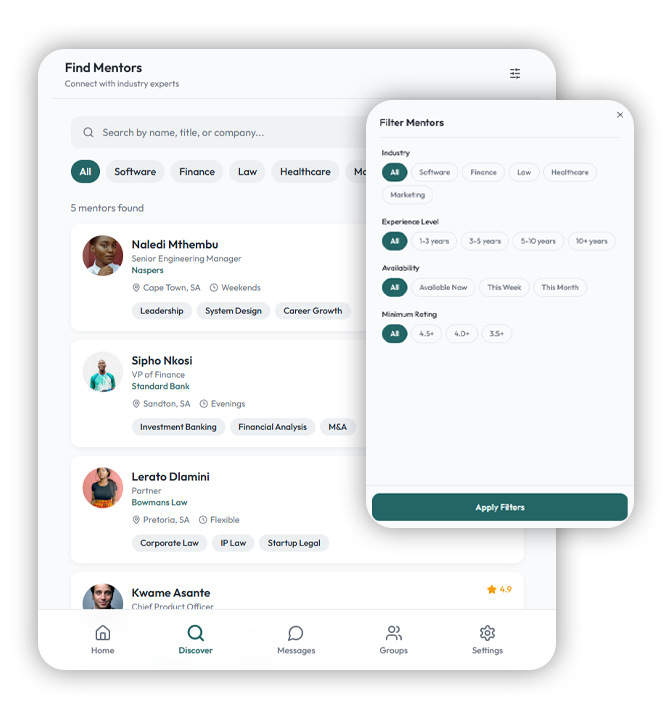
Finding the right mentor is one of the biggest barriers in mentorship platforms. This feature simplifies that process by allowing users to search and filter mentors based on highly relevant criteria, reducing decision fatigue and improving match quality.
Search by name, company, or role
Industry-based filtering (e.g., Software, Finance, Marketing)
Experience level filters (1–3, 5–10, 10+ years)
Availability filters (Now, This Week, This Month)
Minimum rating filters
Mentor cards with expertise tags and availability
This enables users to quickly identify the most relevant mentors, increasing the likelihood of meaningful and successful mentorship matches.
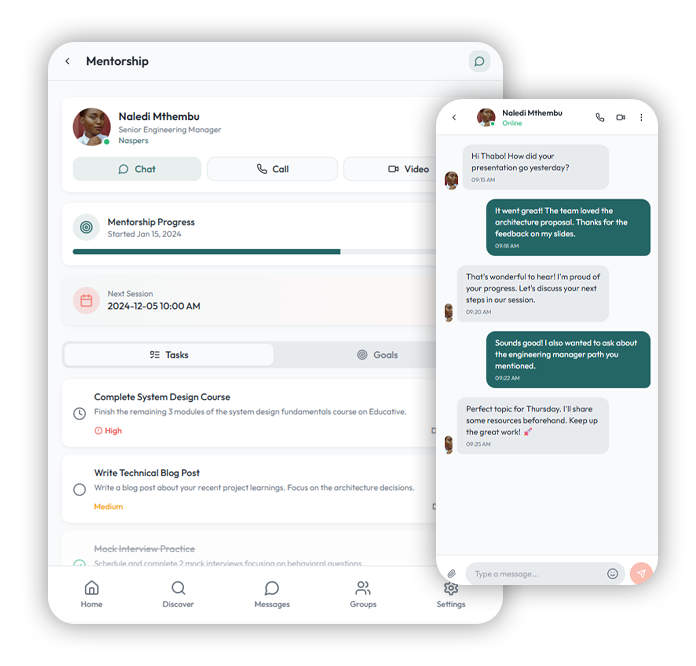
Integrated Communication
MentorGrid eliminates the need for external tools by embedding all communication within the platform. This ensures conversations, decisions, and progress remain centralized and easy to reference throughout the mentorship journey.
Real-time chat interface
Voice call functionality
Video session capability
Conversation history tracking
Quick access directly from mentorship card
This ensures conversations, decisions, and progress remain centralized and easy to reference throughout the mentorship journey.
Progress & Accountability System
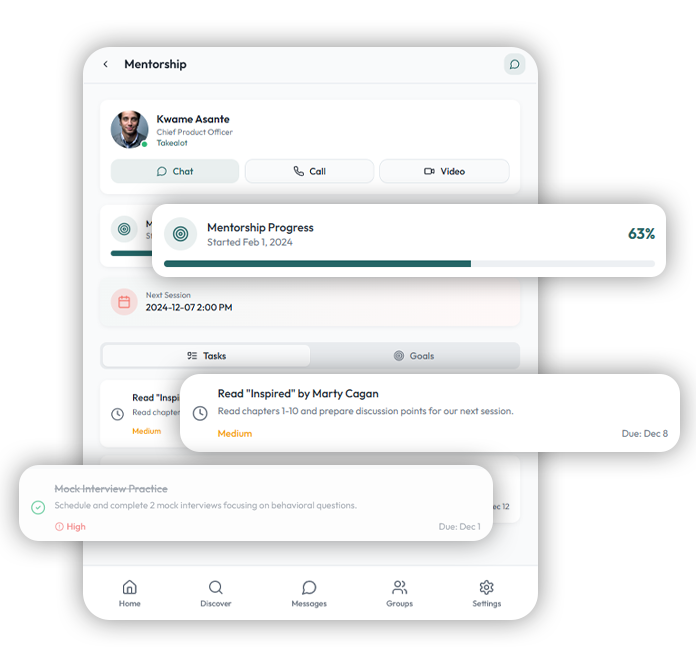
This feature is the core differentiator of the platform. Instead of mentorship being purely conversational, it introduces structure through tasks and goals, allowing both mentors and mentees to track measurable progress over time.
Task creation and tracking
Goal alignment within mentorship
Completion indicators and status labels
Progress bar based on task completion
Deadlines and priority levels (High, Medium)
This transforms mentorship into an outcome-driven experience, reinforcing accountability and consistent personal growth.
Community Groups
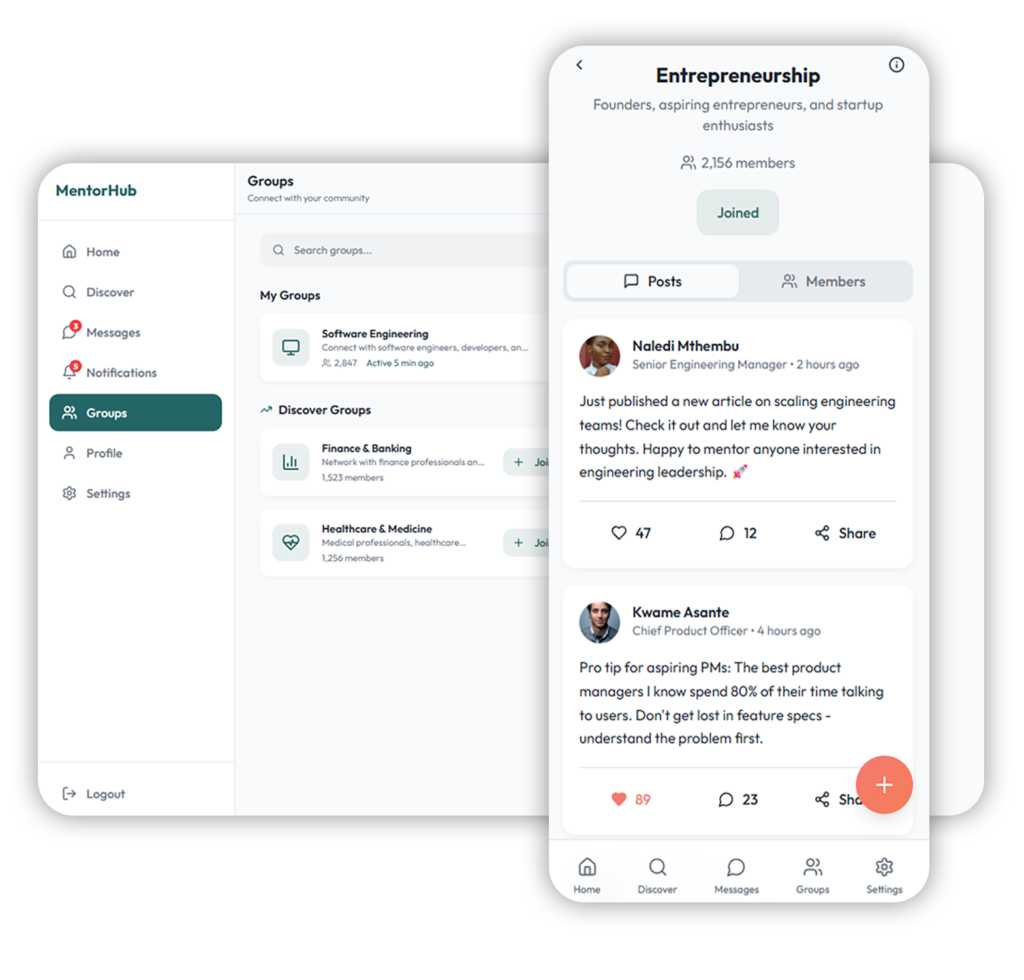
Beyond one-on-one mentorship, the platform fosters peer learning through industry-based communities. This creates a sense of belonging and enables users to learn from shared experiences, discussions, and insights.
Industry-specific groups (e.g., Software, Finance)
Post creation and engagement (likes, comments, shares)
Group discovery and joining
Activity indicators (members, active time)
Peer-to-peer knowledge sharing
This builds a collaborative ecosystem where users can grow not only through mentors but also through shared peer experiences.
Accessibility Features
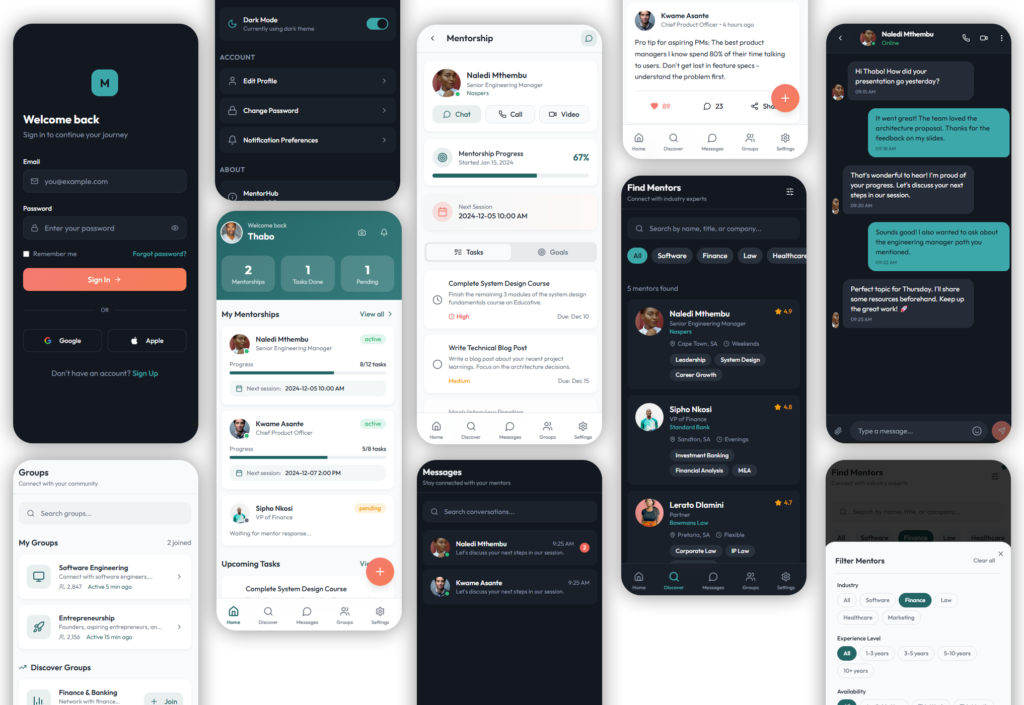
Color & Contrast
WCAG AA compliant contrast ratios
Clear active states
High-contrast buttons
Touch Target Optimization (Mobile)
Large tap areas
Bottom navigation for thumb reach
Floating action buttons
Dark Mode
Reduces eye strain
Improves low-light usability
Usability Testing
To evaluate the effectiveness of the interface and identify usability issues, moderated usability testing sessions were conducted with participants who regularly rely on public transportation.
Testing Methodology
10 moderated usability tests (web)
12 mobile-first tests
6 mentor-side simulations
Task-based testing:
8 participants who regularly use public transportation were recruited. Participant mix included:
- Creating and configuring a new AI agent
- Connecting integrations like Gmail or Slack
- Reviewing and approving pending tasks
- Monitoring agent activity and performance
- Checking notifications and responding to alerts
This group provided insights from both experienced and occasional riders.
Testing Methodology
A total of 14 participants were recruited, consisting of early-career professionals and experienced individuals who have either sought mentorship or provided guidance in their fields.
Participant mix included:
9 guided usability sessions conducted on desktop
11 mobile usability sessions focused on on-the-go interactions
5 mentor-focused walkthrough simulations
This approach allowed us to capture both sides of the experience; users actively seeking guidance and professionals managing mentorship relationships.
Task-based testing:
Participants were asked to complete the following tasks:
- Search for a mentor within a specific industry and experience range
- Send mentorship request
- Review mentorship progress and upcoming session details
- Explore and join a professional community group
These tasks were designed to reflect the core actions users perform when navigating the platform, from discovering mentors to actively engaging in mentorship and community interactions.
Key Usability Findings
92% successfully found a filtered mentor in under 2 minutes
88% understood progress tracking without explanation
83% preferred in-app communication over external tools
75% said structured tasks increased perceived accountability
Expected Impact
+40%
increase in mentorship completion rate
+35%
improvement in session-to-task conversion
90%
reduction in tool switching
Reflection & Learnings
The biggest insight was that mentorship fails not because of lack of advice, but because of lack of structure. Designing MentorGrid reinforced: Simplicity must coexist with structure, accountability drives growth, community reduces professional isolation, and mobile-first thinking changes hierarchy decisions
Mentorship is not just conversation. It is measurable transformation.
Prototype Notice: This project is a functional prototype and is not connected to a live database. Any sign-up or login forms are for demonstration purposes only—you can enter any email and password to explore the interface. No information you provide will be authenticated or stored.